ShiningSource
Shining Soul II as a native program: widescreen, online for 2 to 4 players, achievements, on Windows, Linux and Android.
- Type: PC port
- Runs on Windows, Linux and Android
- By MatyMeatBoy
- Latest release v0.8.5, 2026-11-13
- Source: https://github.com/MatyMeatBoy/ShiningSource
README
ShiningSource
Shining Soul II as a native program: widescreen, online for 2 to 4 players, achievements, on Windows, Linux and Android.
ShiningSource is a port of the Game Boy Advance Shining Soul games built from their matching decompilations. The game's own code is compiled for today's machines; nothing is emulated and nothing is statically recompiled.
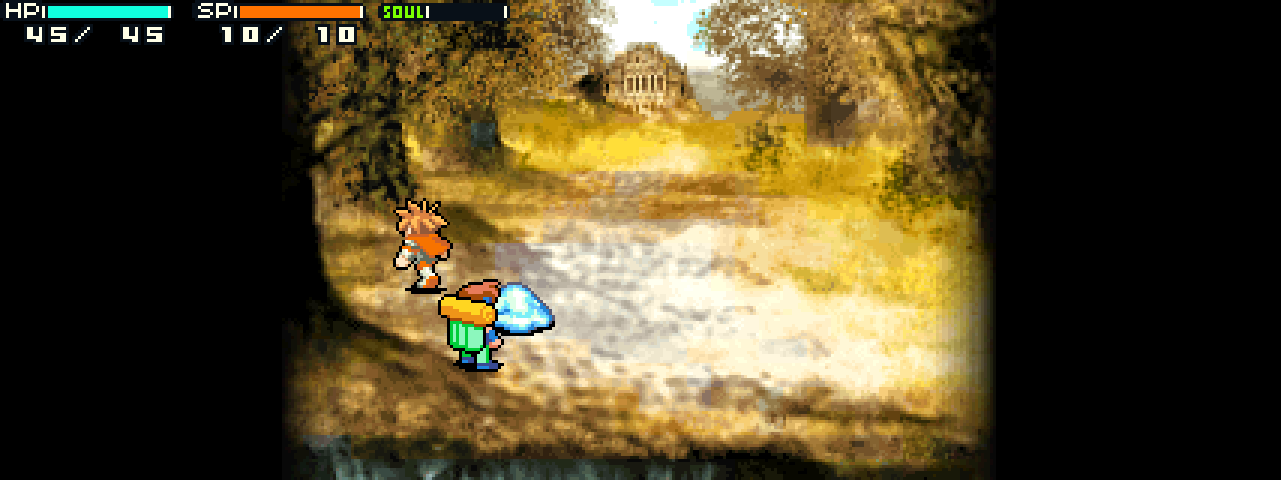
The wide view: the same moment shows more of the map than the console did.
| Game | Source | Status |
|---|---|---|
Shining Soul II (Europe, AU2P) | SS2Decomp: 100% matching C | Playable, in active development |
| Shining Soul | SS1Decomp: decompilation in progress | Joins the port when its decomp is ready (games/ss1) |
No ROM, BIOS or game data is included, here or in the releases. You supply
your own cartridge dump (Shining Soul II Europe, SHA-1
aa1288be9257337abdfe3034898cf6c7aa778fbc); graphics, text and music are read
from it when you play.
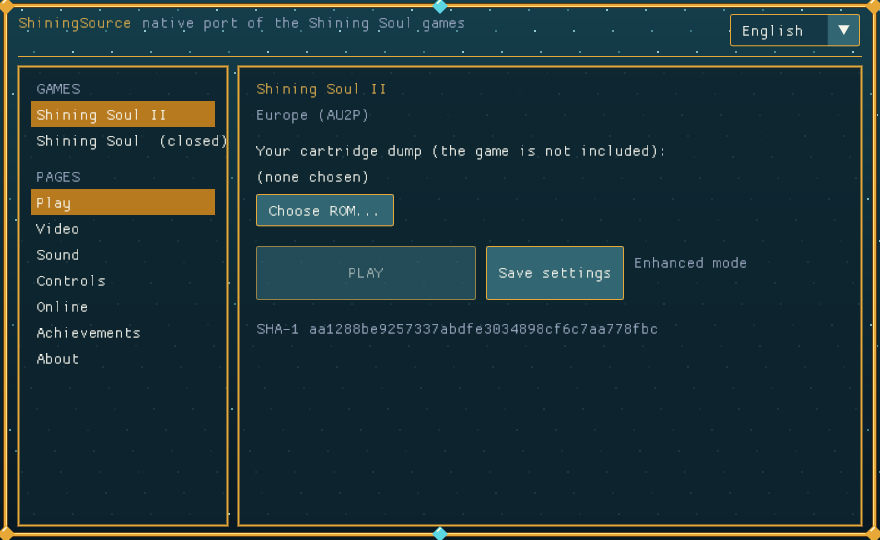
The launcher, drawn in the port's own "Soul" look.
Download
Releases: Windows x64
(.zip: unpack it and start ShiningSource.exe), Android (.apk,
arm64-v8a and x86_64, Android 5 or later) and Linux x64 (.tar.gz, started
from a terminal: see LINUX.txt inside). The launcher asks for your ROM the
first time and checks it.
0.8 is the first public release; the versions before it were test builds. Each release's notes say what was checked and, just as plainly, what was not.
What it does
The game
- Every function of the cartridge is the decompilation's C, compiled unchanged. The port is the layer underneath: memory, the task scheduler, interrupts, video, sound, saves, input and the link cable.
- 64-bit hosts on Windows, Linux (x64 and ARM64) and Android run the game's 32-bit code inside one process. The same scripted 32,000-frame play-through ends in the same frame hash on the builds that are tested with it.
- Saving works as on the cartridge, with a backup of the previous save kept beside it.
Picture
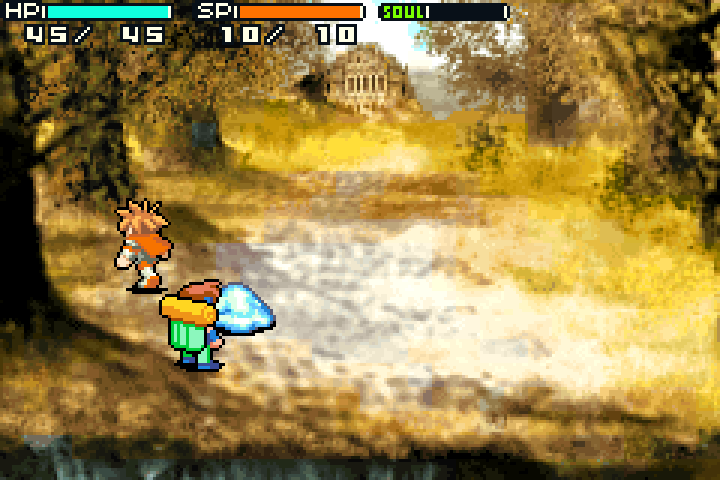
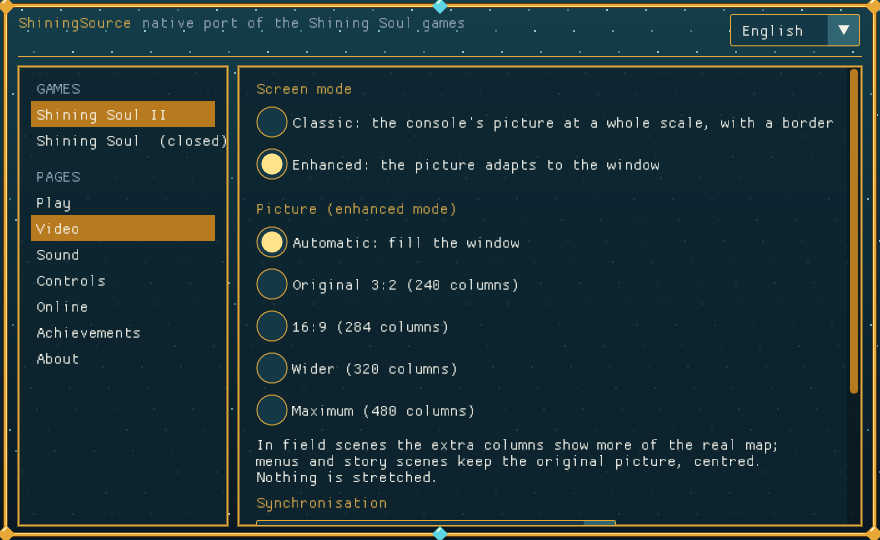
- Two screen modes. Classic: the console's picture at a whole scale inside an adjustable border. Enhanced: the picture takes the width of your window at a whole scale, always pixel-exact.
- Real widescreen. In the field the extra columns show more of the map the game already has (up to twice the console's width), not a stretched picture. Characters, enemies and objects stay visible beside the console's columns.
- The status display follows the screen: HP, SP and Soul sit at the left edge, the L and R menus at the left and right edges; full-screen pages and menus keep their composition in the middle and are always drawn whole.
- Real transparency. The cartridge fakes transparency by showing a sprite every other frame (shadows, ghosts, markers, a character that was just hurt), which a modern display shows as hard blinking. Those sprites are drawn at half strength in every frame instead; fast blinking drawn any other way is smoothed the same way.
- Where a map ends beside the view, the picture fades into black; around a dark screen (a fade, a loading screen) the sides darken with it.
- VSync, variable refresh (G-Sync / FreeSync) or neither.
- Experimental, off by default: the status display drawn larger on a big window.
- A machine that cannot draw every picture in time leaves pictures out, never game time: the game and its sound keep their speed.
| Classic (the console's 240 columns) | Enhanced (here 427 columns) |
|---|---|
 | |
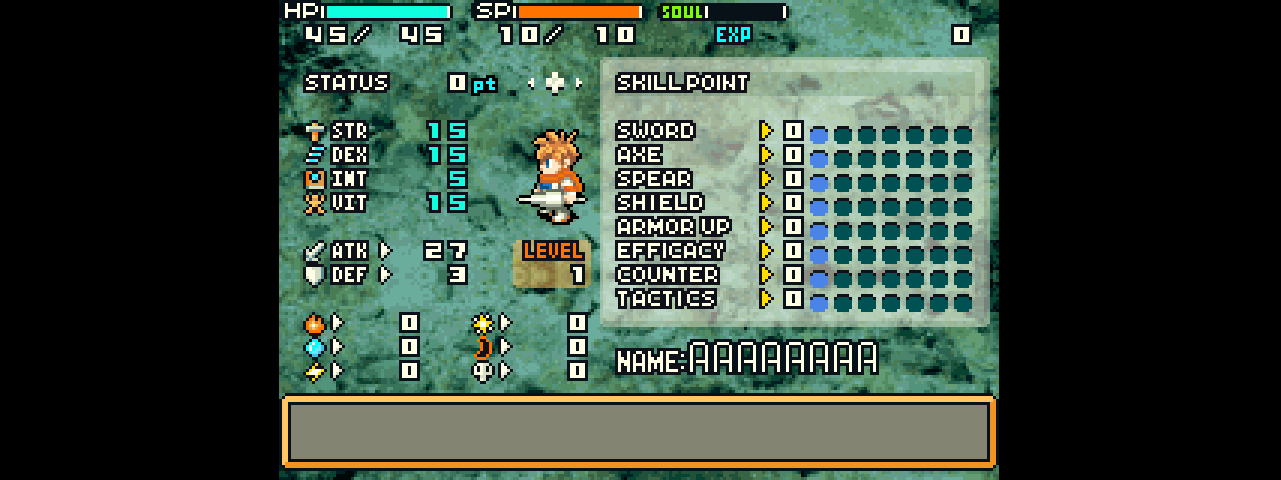
Full-screen pages keep their composition in the middle; the HP, SP and Soul display stays at the left edge.
Online, 2 to 4 players
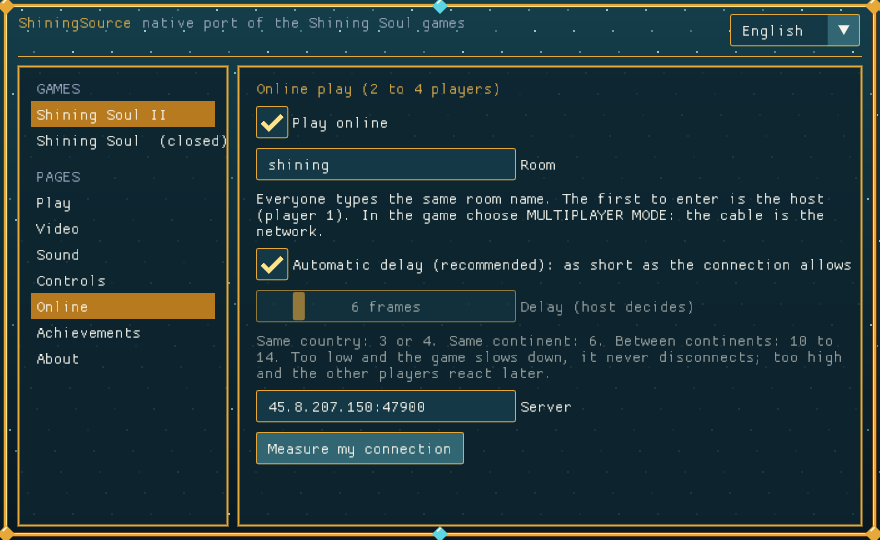
- The game's own MULTIPLAYER MODE over the internet, through a small relay
(
relay/, one UDP port; a public one is the default). Same room name for everybody, then MULTIPLAYER MODE in the game. - Built around what the game's link code really does (see GBANoCable, chapter 8): each player's state is handed over the moment it arrives, nobody waits for a slow player, and the game's one-time events (an enemy appears, an item is dropped or taken, a change of map) travel whole on a reliable channel instead of step by step. A message measured 16 ms between players on one machine.
- A player who leaves or crashes stays as a standing character and the others play on. (When player 1 leaves, the session ends: the game gives player 1 the enemies and the items.)
- A connection that drops comes back. A player whose connection is gone for a while (up to two minutes; the host, up to one) is taken in again and receives everything it missed, in order.
- Crossplay between Windows, Linux and Android.
Comfort
- Skip scene. Start during the introduction or a story sequence offers to skip it; it stops at any question instead of answering for you. Online it is a vote of all players, and the game's own exits are used so nothing runs fast.
- Launcher: verifies your ROM (and finds one that sits beside it), screen mode, sound, every key and controller button reassignable, online, dated copies of your save, language (English / Spanish). It closes when the game starts.
- Touch controls on Android.
- Reports: a crash or a hang on Windows writes
shiningsource_crash.log, and an online session writesshiningsource_net.log, beside the program.
Achievements
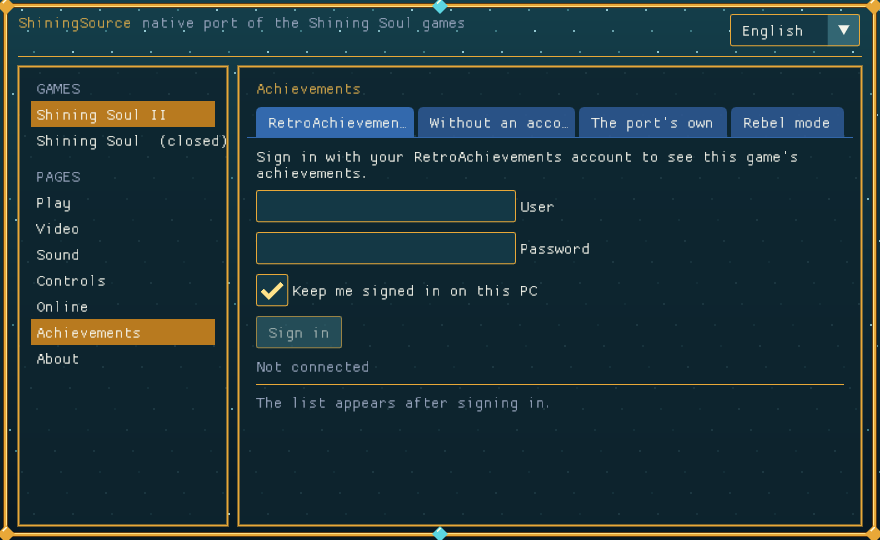
- The RetroAchievements set of your ROM is followed while you play, with a notice and the achievement's badge when one unlocks. Sending unlocks to your account is off by default: this port is not a client RetroAchievements has approved, and an unlock cannot be taken back.
- Without an account: the port's own twelve achievements, and the downloaded set, are kept in a local record.
- Rebel mode: cheats (full HP, full SP, no defeat, gold), with their own record and their own save file. Nothing of a Rebel run reaches RetroAchievements, and cheats stop while the link is running.
Platforms
| Platform | State |
|---|---|
| Windows x64 | Released; the main test platform |
| Android (arm64-v8a, x86_64) | Released; tested in the x86_64 emulator (0.8.4), online against Windows there (0.8.5), not yet on a phone |
| Linux x64, ARM64 | x64 released (.tar.gz, no launcher yet); x64 passes the reference run, an online session and a lost connection that returns in a virtual machine (Debian 12, 0.8.4; ARM64 last run with 0.8); not tried with a window on a desktop |
| Browser (WebAssembly) | Builds from source and plays from your ROM file, saves kept in the browser; offline only; no hosted page |
| PS Vita | Untested alpha package from 0.8.5: built with the Vita SDK, never run on a console (docs/CONSOLES_NX_VITA.md) |
| PS4, PS5, Switch | In progress: designed, not built yet |
Honest state
This is a port in development, tested mostly by scripted runs on one machine and by a small group of players. Known and open at the time of writing:
- Online has been played by three and four people, and each release answers what they found; several of those fixes come from reading the game's code and have not been confirmed in a real session yet. The release notes say which.
- Players reported areas without music. A survey of all 399 songs
(
tools/tests/m4a_survey.py) found none silent and no command the sound engine lacks, so the cause is in when the game asks for a song, not in how it is played. One likely cause is changed in 0.8 (a song asked for again while it was still fading out stayed silent); it was never seen happening in a test, so tell us where the music is missing. - Returning after a lost connection, a player that is gone, and the changes of map around them are tested on one machine with a relay that cuts a player off, not yet on a real network.
- Joining a game that is already in progress is an experiment, off by default (docs/JOIN_IN_PROGRESS.md).
The order of work is in docs/ROADMAP.md; the design and its reasons in docs/ARCHITECTURE.md; measurements of memory, frame pacing and crash handling in docs/OPTIPORT.md.
Controls
Keyboard: arrows, X = A, Z = B, C = L, V = R, Enter = Start, right
Shift = Select, F11 full screen, Escape (or Select + Start) opens the
port's options in the game. A controller works when plugged in. All of it can
be changed in the launcher.
Building (developers)
Requirements: Python 3, git, llvm-mingw
(SHININGSOURCE_LLVM_MINGW) and SDL3 development files (SHININGSOURCE_SDL3).
git clone --recurse-submodules https://github.com/MatyMeatBoy/ShiningSource
cd ShiningSource
python3 tools/build.py prepare      # the game's C, with the port's patches (games/ss2/port/patches.json)
python3 tools/build.py compile
python3 tools/link.py               # 32-bit development program: build/dev32/ss2/ss2_dev32.exe
python3 tools/build_win64.py        # 64-bit host + game image: build/win64/ss2/
python3 tools/build_launcher.py     # the launcher: ShiningSource.exe
Other targets: tools/build_linux64.py, tools/build_arm64.py,
tools/build_android.py, tools/build_web.py. After changing
games/ss2/port/patches.json run prepare and compile again before linking.
The port is tested without a window: SS_FRAMES=N SS_INPUT_FILE=script ss2_dev32.exe rom.gba plays a scripted run and prints a hash of the video
state per frame; tools/net_test.sh runs several players through a local
relay. The decompilation itself is never edited from this repository: what the
port needs changed in the game's C is a list of small patches, each with its
reason.
Layout
| Path | Content |
|---|---|
games/ss2/decomp | submodule: the Shining Soul II decompilation |
games/ss2/port | what this game needs to build natively: modules the runtime replaces, source patches with their reasons |
runtime/ | the port: core (video, sound, saves, scheduler, link), hosts, platform code, achievements |
launcher/ | the Windows launcher |
android/ | the Android package |
relay/ | the online relay |
tools/ | build drivers, generators and tests |
docs/ | architecture, roadmap, release notes |
Credits and license
Built on the Shining Soul II decompilation and its contributors, including emmkay440, author of the original Shining Soul decompilation. Sister projects: ReKHCoM and GBANoCable.
The port's code is MIT (LICENSE); SDL3, Dear ImGui and rcheevos keep their own licenses. The games belong to their owners. This project distributes none of their data: without your own cartridge dump it does nothing. The pictures of the game on this page are there to show what the port does.