Strike Gunner S.T.G Recomp
Strike Gunner S.T.G Recomp is a native recompilation of Strike Gunner S.T.G for Windows that supports two players and rewind functionality.
- Type: PC port
- Game: Strike Gunner S.T.G
- Runs on Windows
- By SlippyGetBackHere
- Latest release v0.1.1, 2026-10-16
- Source: https://github.com/SlippyGetBackHere/Strike-Gunner-STG-Recomp
README
Strike Gunner S.T.G Recomp
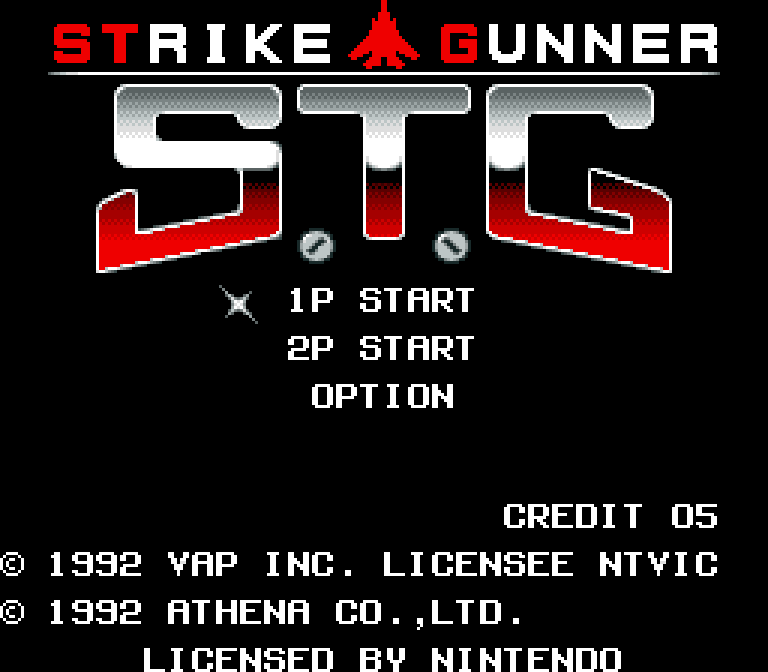
A native recompilation of Strike Gunner S.T.G (USA), built on snesrecomp.
A vertical shoot-'em-up from 1992, recompiled from the 65816 to native code: the game's own logic runs as compiled C against an emulated SNES video chip, sound chip and DMA, with the framework's interpreter as a fallback for code no analysis has reached.
You must legally own a copy of the game. No ROM data is distributed with this project, in the repository or in any release. The recompiled C is generated locally from your own copy and is never committed.
Just want to play? Download the latest release from the
Releases page
and see PLAYING.md: setup, controls, options and how to report
a problem. The rest of this file is for building and developing the port.
Screenshots
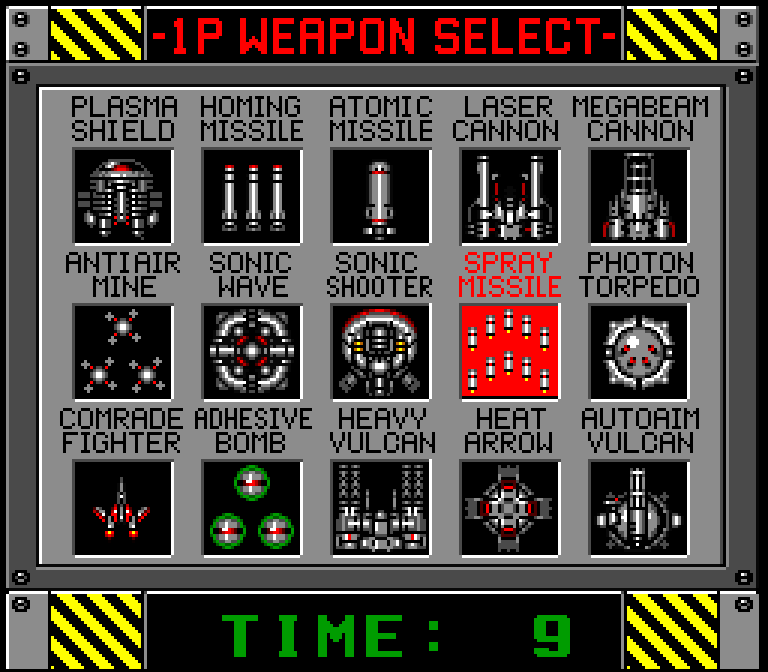 | 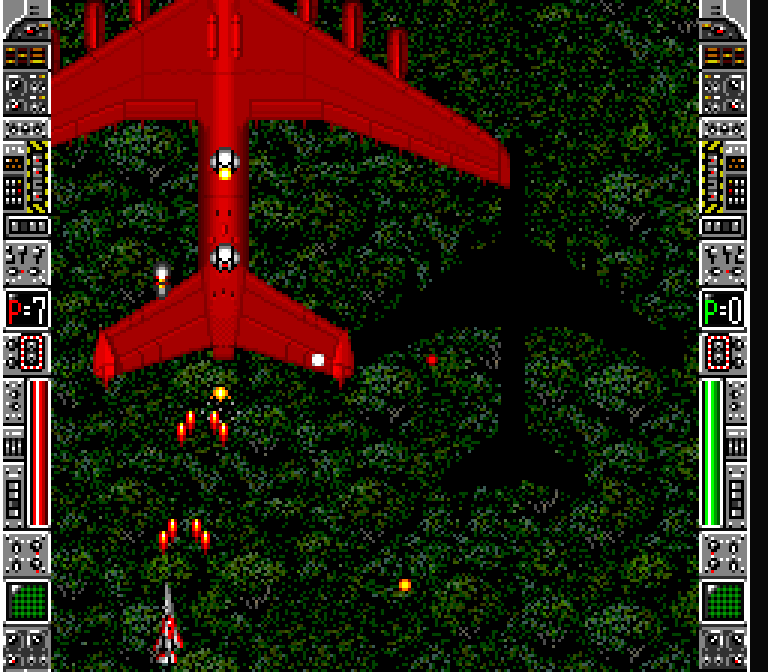 |
| Weapon select: 15 weapons to choose from | Stage 2: a bomber squadron |
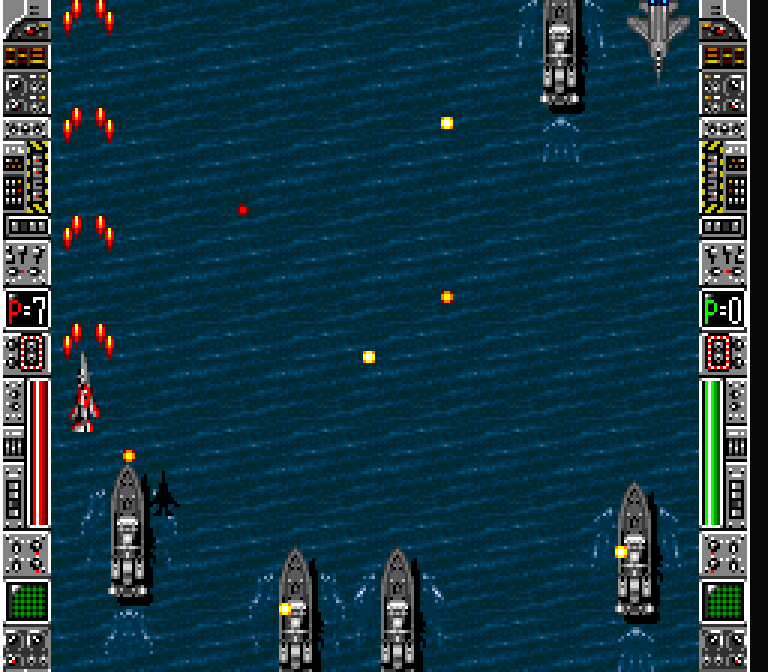 | 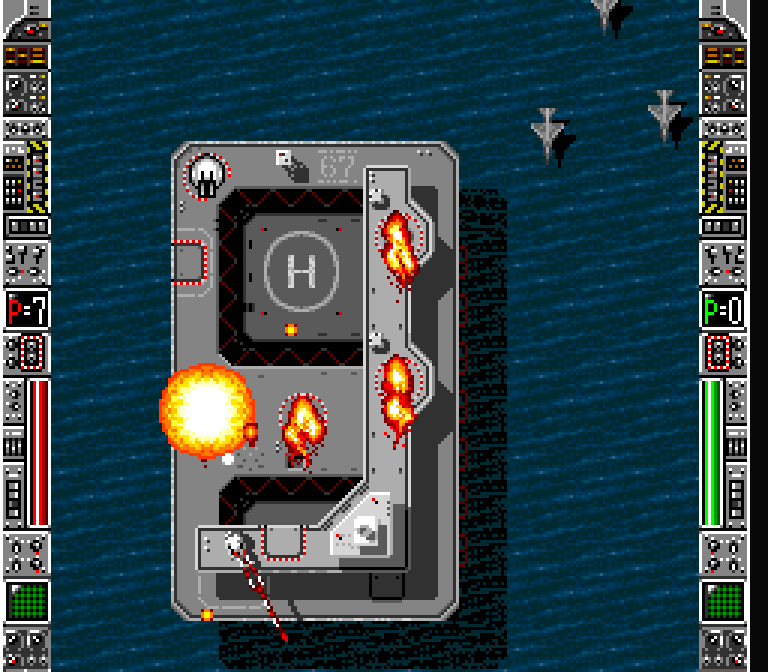 |
| Stage 4: the fleet at sea | Stage 4: attacking a warship |
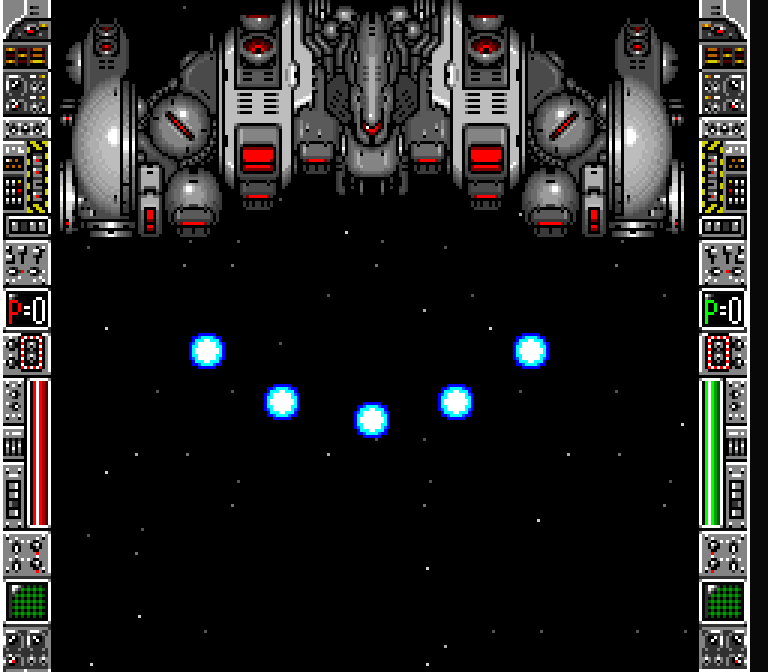 | 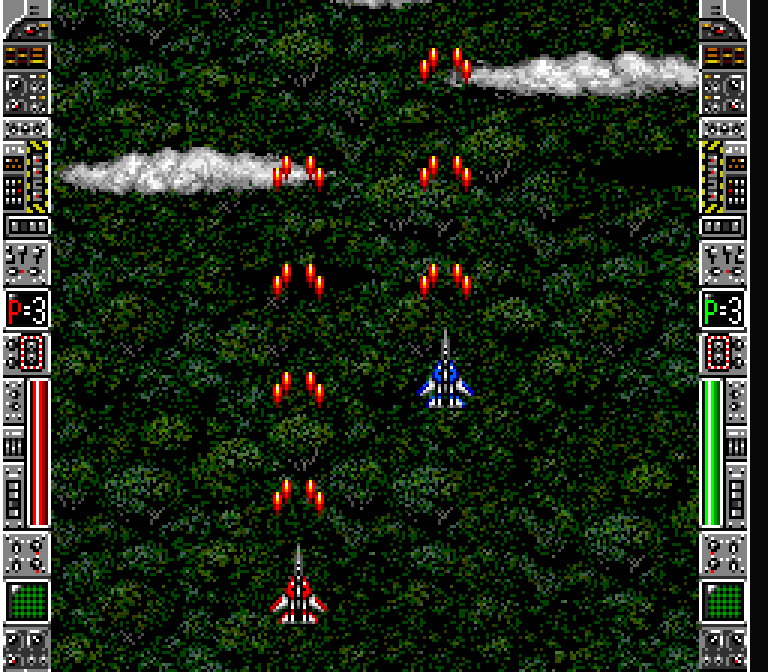 |
| Stage 6: the mothership in the asteroid field | Two players at once (2P START) |
Status
Playable from start to finish (as of 2026-10-14): intro, attract demo, all stages, and the ending through the credits to "The End", in single-player play on Windows. Two-player play starts and both ships answer their own controller (headless check), and the launcher's second seat works with either player on keyboard or pad; a full 2P playthrough has not been done.
- Accuracy. Checked against snes9x with identical scripted input: game events land on the same frames for the first 3,162 frames of a 13,500-frame route, in both compiled and interpreted execution, and stage 4's heaviest section slows down exactly as much as on the reference (3,536 of 3,600 frames on time).
- Graphics. Correct throughout play, including save states loaded while paused.
- Audio. Matches the reference. The remaining occasional pops are in the game's own sound (see Options).
- Native code. 982 compiled variants, seeded from coverage captures of
the intro, attract demo, stage 1, one full playthrough and the ending
(
recomp/coverage/). Uncovered code runs on the interpreter. - Save states keep the frame driver's resume point, so a state resumes exactly where it was made (checked by saving, playing on, and reloading: identical memory and picture).
- Rewind (0.1.1): quarter-second steps, 25 seconds back by default, adjustable in the launcher. Committing a rewind lands exactly on the earlier frame (2 seconds back matched a plain run 120 frames earlier: memory, video memory, registers and picture), and committing, cancelling and opening work from keyboard and controller (checked by hand). Opening the save-state browser or rewind panel without committing leaves the game bit-identical.
- Setup packs.
scripts/package_release.shbuilds a setup pack that generates and builds the game on the player's PC from their ROM, with no Rust or other tools beyond what the launcher downloads. Checked on Windows from a fresh unzip: the code it generates matches a developer regeneration, and the game played through stage 1. Current release: 0.1.1 (tagv0.1.1), the first public release.
Open items and what has been ruled out are in KNOWN_ISSUES.md.
ROM identity
| File | Strike Gunner S.T.G (USA).sfc |
| Publisher | VAP (US licensee NTVIC) |
| Developer | Athena |
| Year | 1992 |
| Mapping | lorom |
| Region | USA (North America) |
| Coprocessor | none |
| CRC32 | d054e288 |
| SHA-256 | 05f14e6ed3394d9273e2397769a8acf1a9db646be6066e82269521e8eec53562 |
tools/regen.sh refuses to run against anything else, so a mismatched
revision fails immediately instead of producing subtly wrong output.
Build
On Windows, configure with Ninja and clang (the retcomm cmake-clang-v1
toolchain): the default Visual Studio generator uses MSVC, which cannot
compile the framework. The analyzer needs Rust (cargo) the first time.
git submodule update --init --recursive
bash tools/regen.sh --rom "/path/to/Strike Gunner S.T.G (USA).sfc"
cmake -S . -B build -G Ninja -DCMAKE_BUILD_TYPE=Release -DCMAKE_C_COMPILER=clang -DCMAKE_CXX_COMPILER=clang++
cmake --build build -j
The snesrecomp submodule comes from a fork,
SlippyGetBackHere/snesrecomp,
branch local/mode2-renderer-fix: upstream plus twelve fixes this port needs
that are not upstream. git clone --recursive fetches it.
patches/README.md lists the fixes and how to re-apply them to upstream.
The ROM does not have to live in the repository — keeping it on your own
drive is the better habit, and SNESRECOMP_ROM sets the path once for a
shell. Without either, tools/regen.sh finds Strike Gunner S.T.G (USA).sfc at the repo root,
then the path the setup wizard recorded in rom.cfg; .gitignore blocks
both from ever being committed.
tools/regen.sh verifies the ROM, generates src/gen/*.c, and re-syncs
recomp/funcs.h. Re-run it whenever you change anything under recomp/.
Run
./build/StrikeGunnerSTGSNESRecomp                     # launcher picks the ROM
./build/StrikeGunnerSTGSNESRecomp "/path/to/Strike Gunner S.T.G (USA).sfc" # or name it and skip the launcher
With no ROM on the command line the build opens the recomp-ui launcher: a ROM
picker with a verification badge, plus display / audio / input settings. Your
choice is cached in rom.cfg beside the executable, so the next launch opens
on it and "Skip launcher on boot" makes it immediate. If the launcher is not
built in (--no-recomp-ui), the host falls back to a native file picker.
Either way the ROM is checked against the digests above before anything boots — a dump that could not have produced this build is refused at the door rather than mis-executing ten frames in.
Options
strikegunner.ini beside the executable (created on first launch):
| Key | Values |
|---|---|
ReduceSlowdown | 0 authentic console speed (default); 1, 2, 3 run the SNES CPU 2x, 3x, 4x faster |
AudioDeclick | 1 (default) caps sound samples that overflow instead of wrapping them, removing the loudest pops; 0 is the console's exact output |
The game slows down where its logic needs more than a frame; at 1 the
heaviest scene measured (stage 4, ocean section, extra fighters out) holds
60 fps. Frames that already fit are unchanged, so game speed and music stay
authentic. Restart to apply. Some pops remain with AudioDeclick on: they are
in the original game's sound (snes9x and footage of the console have them
too). It is a separate file because the host rewrites config.ini from the
settings it knows.
Layout
| Path | What lives there |
|---|---|
recomp/ | Analysis input: bank*.cfg, symbols.toml, generated funcs.h |
recomp/coverage/ | Coverage captures that seed the analyzer (addresses and hit counts, no ROM data) |
rom_identity.txt | ROM digests — read by the build, tools/regen.sh and CI |
src/ | Host code: main.c, game_rtl.c (frame driver, save-state hooks, options), gen_stubs.c (frame-wait and task-switch hand-backs) |
src/gen/ | Generated C. Never committed — regenerate locally |
snesrecomp/ | Framework submodule (owns lib/recomp-net, lib/retcomm-rbengine) |
tools/ | regen.sh — the ROM → C pipeline |
scripts/ | package_release.sh — player-facing zip |
patches/ | The local framework fixes, one patch per commit, with notes |
framework_pins.txt | Exact framework commits this project is pinned to |
KNOWN_ISSUES.md | Open issues, resolved ones, and what was ruled out |
How the port works
- Frame driver (
src/game_rtl.c). The framework's beam-aligned driver with one change: NMI is taken the way the CPU takes it, so the game's NMI handler -- which switches NMI off and runs for several frames during scene changes -- can span fields. - Frame waits and task switches (
recomp/bank00.cfg,bank05.cfg,src/gen_stubs.c). Compiled code cannot wait for the next frame, so the game's four wait routines and its cooperative task scheduler ($8D2E / $8D68) are declaredhle_funcand handed back to the driver's interpreter, which runs the original bytes. - Object handlers (
recomp/symbols.toml,bank03.cfg). All 165 entries of the object table at $03:8000 and the object loop are compiled, so enemies from every stage are native code.
Continuing
- Coverage. Play with
--coverage-capture=on, add the capture from%LOCALAPPDATA%\snesrecomp-coverage\strikegunnerstg\torecomp/coverage/, re-runtools/regen.sh, rebuild, and check the result plays the same. A new frame wait reached only from compiled code shows up as a hitch or freeze with an[interp_cap]line in the log; declare it like the others. - Diagnostics.
STG_AUDIOLOG=<file>logs the audio pipeline once a second. The framework'stools/snesrefwith a libretro SNES core is the reference for timing and audio comparisons. - Never edit
src/gen/or synthesise a result to get past uncovered code. Fix the config or the framework and regenerate.
Multiplayer
Two players at once on one PC: 2P START on the title screen, one
controller each (or rebind [player2] in keybinds.ini). Netplay is not
built into this target.
License
This project's own source is under the license in LICENSE. The framework
carries its own terms — see snesrecomp/LICENSE and
snesrecomp/THIRD_PARTY_ATTRIBUTION.md. Neither covers the game data, which
is not distributed here.